


How your operators can speed up investigations with intelligent search capabilities
Every investigation starts as a race against time. In a busy security operations center, cases can take hours to review. Watching video surveillance clips from multiple camera angles and checking them against timestamps in the video management system (VMS) often takes longer than the incident actually lasted.
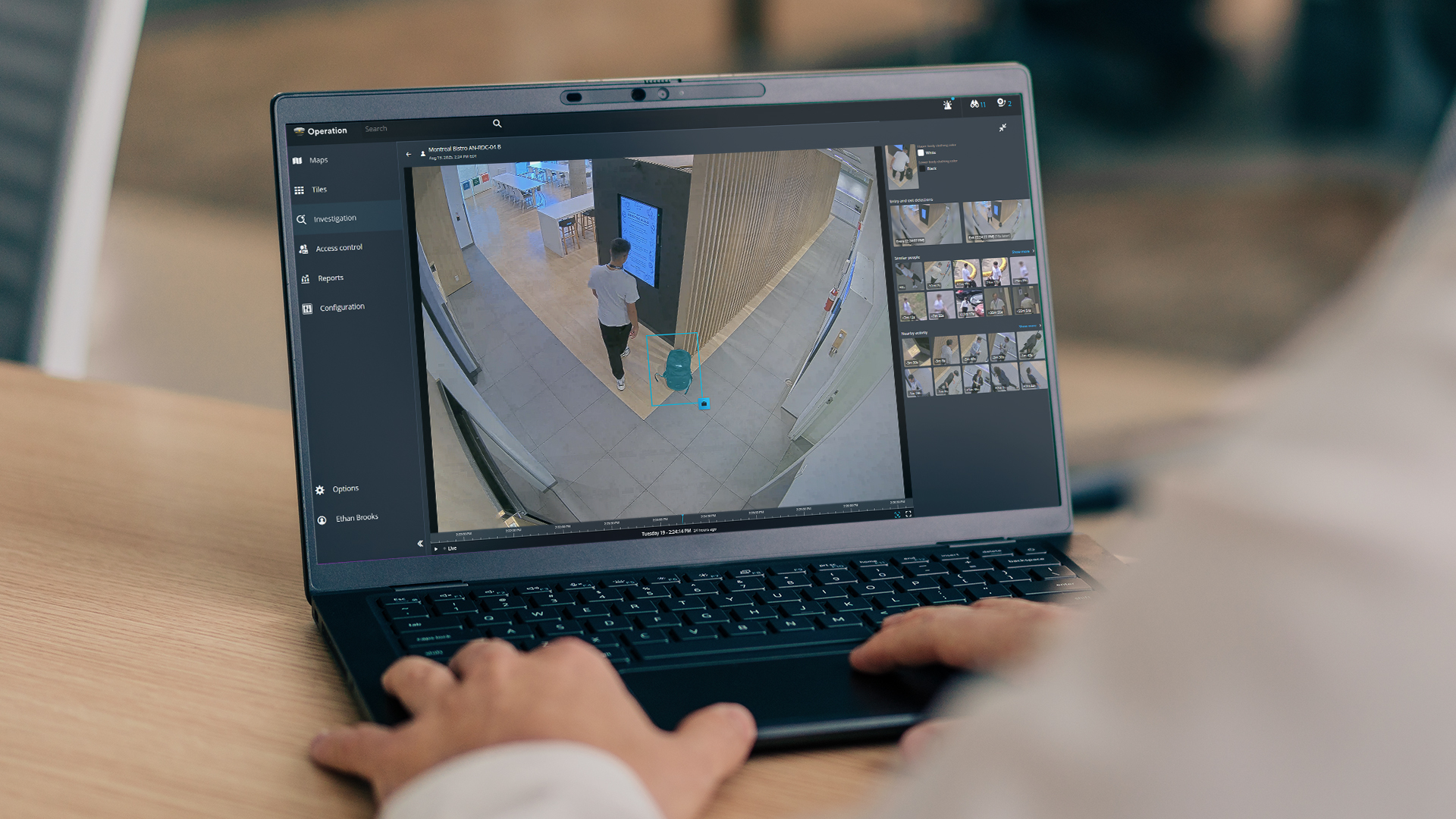
It’s no surprise that these challenges can slow incident response, delay resolution, and leave potential threats unaddressed. Security operations might seem to be running smoothly until the next alert lands before the previous case has been closed.
That’s a lot of pressure for operators.
Maybe there’s a faster, more innovative way to find what matters without missing relevant details. Could smart investigation solutions that help operators identify people and objects of interest in minutes be the key?
VIDEO
What is intelligent search, and why is it important?
Finding the right footage shouldn’t take hours. Intelligent search helps operators locate critical moments in their video surveillance footage faster by using visual data, metadata, and context within the VMS. Instead of scrubbing through tons of footage, operators can use everyday language to describe what they need to find or select a person or vehicle on screen to get accurate results in seconds.
Thanks to intelligent automation, these tools help security teams find evidence and can empower your operators with quicker answers and clearer timelines. Intelligent search is powered by AI technology to speed up data processing, so operators can make fast decisions when every second counts. The goal is to support human judgment, not replace it.
So how does this actually simplify investigations?
How does intelligent search improve security investigations?
Picture this: someone steals a car from your organization’s parking lot. Your security operator opens a task in the VMS and runs a natural language query: “black car between 8 am and 8 pm.” Instantly, the intelligent search function scans recorded video surveillance and filters clips that match that description, showing relevant vehicles and nearby motion.
This is where intelligent search really shines: entry/exit detection pinpoints the exact moment the vehicle enters and leaves the scene, providing a clear timeline of its movement. Then, operators can run a search on the driver once they’ve left the vehicle and follow the same person across multiple cameras using similarity search, even as lighting or angles change. What once took hours of rewinding now takes minutes.
Together, these features connect fragmented clips into a complete visual story, transforming forensic search in video investigations into a guided and intuitive process. This helps operators resolve cases more quickly and simplifies the overall investigation workflow.
FEATURE NOTE
What makes intelligent search unique? It understands context.
Most search tools find what you ask for. Intelligent search gets what you mean.
Operators no longer need to navigate a maze of filters and settings. Instead, they can focus on the task at hand, as intelligent search uses contextual cues to adapt to their queries in the VMS. If you’re looking for a person, the system can suggest other recordings featuring individuals who resemble them, making it easier to connect events across different cameras. It’s all about making video review more intuitive and efficient.
By going beyond standard video surveillance searches, intelligent search brings context to every query. That means you can track a vehicle and see what happened before and after it was parked in a particular spot. That’s a truly user-centric approach to evidence gathering, one that keeps people, not algorithms, at the heart of every investigation.
Why a streamlined SOC empowers incident response
Training new operators takes time, but learning shouldn’t be a barrier to acting fast. With an intuitive, human-centric interface, intelligent search for Security Center SaaS makes forensic search in video investigations feel natural from day one. Operators can search intuitively using everyday language or by drawing a box directly on screen. That means no need to memorize camera layouts or navigate complex menus.
This simplicity pays off during an active investigation. Accelerated workflows and guided responses help operators connect the dots faster, with clear steps from detection to resolution. They can move through the investigation smoothly, with an interface that helps them stay on track and highlights what matters next.
With greater visibility across operations, your security operations center stays aligned and cohesive. Now, your operators can see the whole picture: how people and vehicles move through spaces and how incidents progress over time. It’s the kind of clarity that makes coordination effortless, reduces fatigue, and paves the way for even better outcomes.
