


The hidden operational cost of fragmented hospital security systems
Disconnected hospital security systems slow response, drain staff time, and raise costs. Learn how a unified security platform improves security management.

Every day, hospital security teams lose time to disconnected systems. Operators switch between applications, re-enter information, and piece together events from multiple sources. These inefficiencies may seem minor in isolation, but they add up to significant costs across facilities and over time.
Fragmentation often develops gradually through acquisitions, expansions, and decentralized technology decisions, making the problem easy to overlook until the impact becomes impossible to ignore. Slower security responses, repeated data entry, longer investigations, and manual workarounds create friction for the people who keep patients, staff, and visitors safe. They also contribute to lower patient and visitor satisfaction.
One solution is to unify security systems in a single platform. Taking a phased approach to unification lets organizations address priority risks first. It also lets them preserve compatible infrastructure, so they can improve security operations without disrupting care.
BLOG
4 operational impacts of fragmented hospital security systems
Some hospital security costs exist on paper, such as hardware, installation, licenses, and service contracts. Others are less visible. Disconnected systems create hidden costs in the form of extra time and resources spent on incident response, investigations, and compliance reporting.
 Slower verification increases response pressure
During a security incident or threat, access to timely and accurate information is critical. Siloed security systems make it difficult to verify what happened. For instance, if a door alarm sounds near a restricted pharmacy area, operators may have to manually cross-check footage against visitor records to see who was involved.
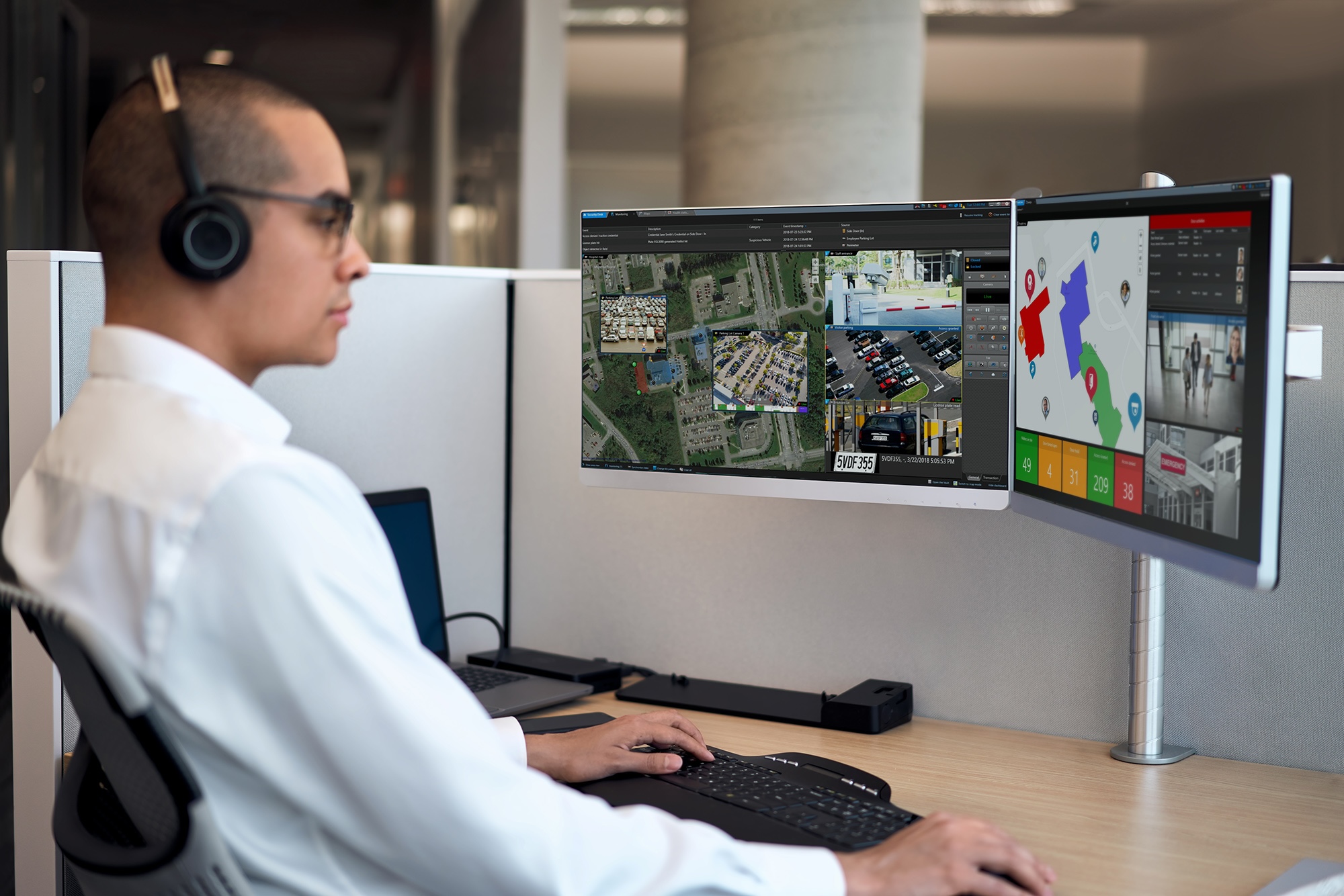
With unified hospital security solutions, teams have what they need to respond quickly without switching between systems. Operators get improved situational awareness for a more informed security response.
 Disconnected information limits situational awareness
Even when an operator has time, disconnected systems make it hard to understand how separate events may be related. For example, a visitor may trigger an access control alarm at one entrance, while security receives a separate report of suspicious activity in another building. In disconnected systems, these events would appear unrelated. But when information is unified, operators can assess the situation more effectively to quickly determine whether they’re connected.
 Fragmented workflows complicate coordination
Hospital security management teams often rely on the cooperation of facilities, IT, law enforcement, and operational teams to resolve incidents. A door propped open is a security alert, but fixing it belongs to maintenance. Workplace violence is a security issue, but local police need all relevant information to investigate. A lighting outage in a parking garage is a safety issue, but it's a facilities work order on paper.
When teams work from a common platform, they can view the same alerts, share information, and coordinate resources to resolve the issue.
 Investigations, audits, and reporting become manual exercises
Post-event investigations require more manual work when every system holds a separate piece of the story. Take a case of workplace violence against hospital staff as an example. After the incident, security has to manually reconcile access control logs, video, and other incident details to establish a timeline. This is a time-consuming task, one that creates opportunities for inaccuracies and gaps. But in a unified system, connected workflows standardize response procedures and capture relevant activity as an incident unfolds, reducing the need for manual reconstruction afterward.
Each inefficiency tends to look minor in isolation. When repeated daily across multiple facilities, they add up to real, ongoing costs.
CUSTOMER STORY
The hidden financial costs affecting different departments
These operational inefficiencies aren’t limited to hospital security operations. A fragmented environment creates time and infrastructure costs that show up in other departments:
- Human resources – Every role change, new vendor, and employee departure is reflected in access control permissions. When healthcare access control and human resource systems aren't connected, those access permissions have to be updated by hand. If a hospital system merges with or acquires another hospital, that means even more employee records and access permissions to reconcile, with no single source of truth.
- IT – Many IT teams manage software updates and system health checks separately on different platforms. A unified approach helps IT ensure systems are up to date across multiple platforms at once. It also lessens the burden of maintaining cyber hygiene by providing more consistent cybersecurity capabilities and updates.
- Guest services – Hospital visitor management processes vary, and manual processes can introduce long waits. With a unified solution, the same system that welcomes visitors can grant automated access permissions or notify security when someone enters an area they shouldn’t.
Modernize in phases without starting over
For many healthcare organizations, modernization can feel like a significant undertaking. Some hospitals may postpone new system deployments because they look expensive or disruptive. Others replace infrastructure too soon, believing they have to start from scratch. Both assumptions carry their own cost.
To make modernization more approachable, start by reframing it as a series of steps, not a single undertaking. Unifying your systems doesn't mean ripping everything out and starting over. In fact, sometimes your existing hardware can be used with the new system.
For example, you may start by bringing your cameras into a unified hospital security platform. From there, you can add access control, intercoms, license plate recognition, and other solutions over time. A phased approach helps you fit modernization to your budget and timeline.
Look for solutions that also provide flexibility in how you deploy. You should be able to choose an on-premises or cloud deployment, or a hybrid combination, to meet the technology and compliance needs of different sites and facilities.
Reducing complexity without disrupting care
The impact of fragmentation isn’t always obvious, but the costs can add up and affect multiple departments.
Unified hospital security systems help healthcare organizations improve operations, support faster response, and create safer environments for patients, staff, and visitors. By adopting a unified platform and connecting their highest-priority systems first, healthcare organizations can modernize at their own pace while keeping the focus on patient care.
