


Physical security trends for 2026
This year, organizations are rethinking how their operations can incorporate technology— including cloud solutions and AI—to enhance protection, efficiency, and compliance.
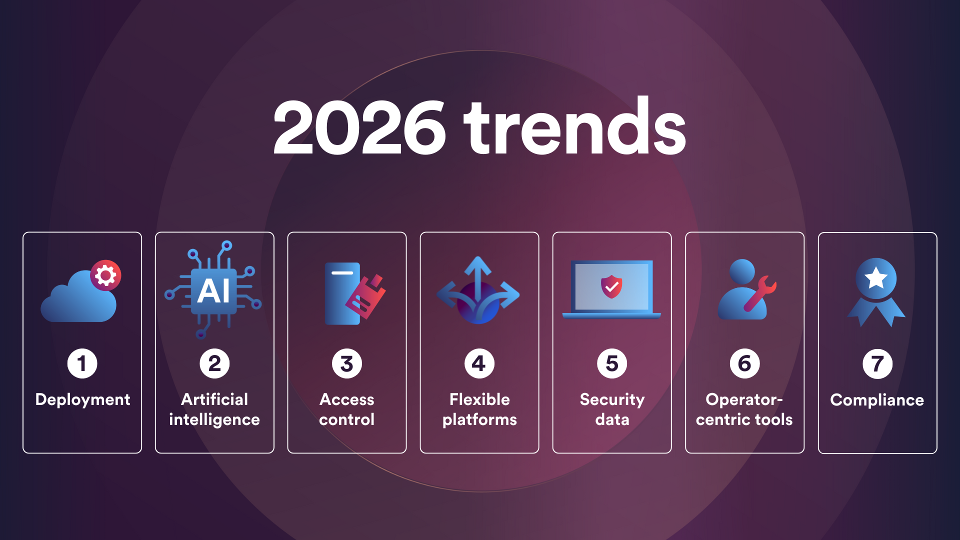
Read on to see the top seven trends shaping the physical security industry in 2026.
 |
Deployment choice is core to solution selection |
Moving into 2026, organizations are focused on deployment choice. They know that cloud and on-prem systems serve specific needs and requirements, and they want the freedom to choose the deployment model that works best for their needs—or a mix of both models.
Deployment flexibility helps businesses scale and upgrade security on their own terms. They can automate updates and maintenance using cloud services, while keeping complete control of data on-prem to meet internal policies and compliance, if needed. They can also deploy software-as-a-service solutions only at specific sites or use cloud-managed appliances to modernize existing systems, without replacing their equipment.
EBOOK
Deployment flexibility is about having full control over your environment and budget. It gives you the freedom to pivot between cloud and on-prem as required.
To stay agile as priorities shift, organizations will also need open and connected architectures. This will make it easier to choose between cloud, on-prem, and hybrid setups while giving users a consistent, intuitive experience across their environment. Open architecture also supports standardized security policies and offers greater hardware choice, letting companies choose devices with integrated tools that drive data insights.
 |
Companies will prioritize results over AI hype |
According to the recent State of Physical Security report, 45% of end users are prioritizing AI in 2026. This is up from 21% in 2025, positioning AI adoption among the top three projects next year.
REPORT
Although AI is gaining significant attention in the physical security industry, the reality often falls short of the hype. As a result, organizations are becoming increasingly critical of how AI is used. Rather than jumping to deploy AI tools, they’re seeking intelligent automation (IA) solutions that genuinely help their operators work more efficiently.
Some real-world examples of intelligent automation available today include:
- Detecting patterns across devices to flag real threats
- Using natural language to speed up evidence searches
- Generating all video archives of figures who resemble a suspect
- Digitizing workflows to enhance productivity and compliance
End users are also paying closer attention to how AI models work, what information they rely on, and how that data is stored and shared. As AI tools become more capable, organizations will favor vendors who are transparent about the steps they take to deploy AI responsibly.
BLOG
 |
Access control upgrades will accelerate with new tech |
In 2026, access control as a service (ACaaS) adoption will keep rising, with organizations favoring a hybrid approach. Hybrid-cloud deployment helps them maintain on-prem systems while spinning up sites faster and streamlining access to updates and new features.

Expanding access control functionality will remain a key way for companies to modernize their security systems. Many organizations want access control and video in one platform, whether their systems are cloud or on-prem. They also want the ability to use mobile credentials and biometrics in high-risk areas or places where a card isn’t convenient.
The most significant gains will come from applying access control data to operations:
- Automating HVAC shutdown when the last person badges out
- Generating real-time cardholder audits during emergency responses
- Digitizing employee certification or license checks to improve safety compliance
These benefits will continue to shift the mindset around access control as an ROI-generating business tool, rather than a stand-alone security solution.
EBOOK
 |
Flexible, secure platforms will power the connected enterprise |
With more devices now connected to the internet, organizations are eager to capitalize on data insights to improve efficiency and security. Harnessing data effectively requires connecting IT, security, and operational systems. This is fueling demand for deeper platform convergence, pushing flexible and open solutions to the top of decision-makers’ minds.
Organizations want platforms with flexible integration options that let them unify various IoT sensors, building systems, and smart devices. They also want the freedom to run both cloud-native and on-prem applications so they can easily scale without sacrificing performance. Built-in cybersecurity and data residency are also crucial as threats evolve.
With endless device and platform choices, end users will seek guidance on what devices and solutions to implement and how to manage them all. They’ll increasingly rely on system integrators to improve data visualization and reduce complexity so that all system components—from access readers to environmental sensors—work together to deliver value across the organization.
BLOG
 |
Security data will unite teams at the decision table |
Physical security systems are becoming integral to business operations because of the data they generate. This is pulling other departments and new decision-makers into the buying process.
While capitalizing on security data isn’t new, maturity has accelerated. Security teams are already expanding operational use cases and implementing data-driven tools to reduce false alarms and identify risks faster. In 2026, more organizations will look beyond traditional security uses, sharing data with marketing or operations teams who want to analyze foot traffic, occupancy, congestion, or wait times.
Human resources (HR) and facilities teams also stand to benefit from this trend. By linking access control and HR databases, teams can track attendance or automate credentials updates based on employee status or job roles. They can also link cardholder databases to point-of-sale or automatic license plate recognition systems, facilitating cafeteria purchases and parking lot access.
EBOOK
 |
Operator-centric tools will guide new investments |
Security teams are under pressure to work faster with limited resources. Some operators may be new to the job, while others may lack the skills to navigate complex systems. Knowing this, department leaders want intuitive solutions that are easy to learn but help teams stay nimble and collaborate efficiently.

This year, work management software will continue to centralize tasks and automate routine processes, giving operators a clear picture of what needs their attention. This can look like:
- Dispatching security guards to handle incidents
- Monitoring active guard tours and patrols
- Scheduling and overseeing maintenance tasks
- Coordinating system commissioning and training
- Tracking equipment usage and team availability
Investigative processes will also get a boost, as organizations implement digital evidence management systems to simplify case building. While budget concerns may slow adoption, companies that harness these solutions will see measurable gains in output and team engagement.
EBOOK
 |
Rising complexity will fuel demand for embedded compliance |
As organizations add new technologies and expand system connectivity, their environments are becoming increasing ly complex. This is heightening concerns around cybersecurity and privacy, prompting many companies to look to regulatory requirements and data protection mandates for guidance. They want assurance that their systems are protected comprehensively.
Users are demanding solutions with built-in privacy and cybersecurity features that streamline compliance with tightening regulatory requirements. This year, organizations will gravitate toward security platforms that automate risk detection and handle data responsibly across all environments.
