The key to cost-efficient physical security
What’s the most cost-effective physical security system? A unified platform with an open architecture is key to cutting costs—and getting more value out of your investment.

Accordin g to our latest industry report, around 50% of channel partners and manufacturers expect economic pressures—tariffs, inflation, and rising costs—to slow projects down in 2026. Hiring delays have dropped from 44% to 32%, but most respondents still expect staffing challenges to persist or worsen. That means finding ways to reduce costs and simplify operations is still crucial.
A big source of costs you might have overlooked? Choosing integrated physical security systems instead of a single unified platform with open architecture.
The cost of keeping separate systems integrated can really add up as your security environment scales. Understanding unification can help you set up your system to expand and adapt as your organization grows.
EBOOK
What are integrated physical security systems really costing you?
An integrated security system connects standalone solutions. It might bring together access control, video, intrusion, and automatic license plate recognition (ALPR) from different vendors. But even when these systems are linked up, their ability to communicate with each other can be limited.
Sure, you might be able to see intrusion or access control events within your video system’s interface. But you still have to jump between platforms to handle many tasks. Reporting, deep-dive investigations, cybersecurity hardening, and maintenance all happen in separate systems.
Here are four ways an integrated system could be costing your organization:
 |
System updates |
Upgrading one system can create compatibility issues with another integrated system, leading to unexpected delays and costs just to get back to normal operations. A unified platform allows seamless updates across systems, reducing time and expense.
 |
Cybersecurity risks |
Each system has its own workflow, and any inconsistencies across them may complicate your cybersecurity strategy. These gaps can expose you to threats that increase the risk of costly breaches and downtime. A unified platform gives you a centralized view of the security environment with a uniform workflow to reduce errors and oversights.
 |
Operator training |
Operators often spend valuable time learning the features and functionalities of multiple systems. Consolidating operations into one interface simplifies training, saving time and resources that you can redirect to more strategic priorities.
 |
Maintenance |
Managing more than one maintenance agreement is time-consuming and costly. Unifying your systems can help you streamline maintenance and reduce renewal overhead, so you can reallocate those savings to other parts of your security operations.
BLOG
How does unified physical security save on costs?
A unified physical security system consolidates all your physical security products into one platform. Operators can manage access control, video surveillance, ALPR, intercom, analytics, and intrusion from a single view.
Unification means smoother system updates, better feature compatibility, and simpler operations for your team. Here’s how this cuts down on costs:
Simplified system management
Keeping your systems up to date and optimized takes regular maintenance. Because unification blends the different parts of your security into one platform, you can update your systems and devices without worrying about compatibility issues. Maintenance that’s easier to manage across your entire security installation leads to lower risk and stronger compliance organization-wide.

For example, managing all your devices from one spot helps you stay current with system updates—whether to resolve critical security flaws or get incremental improvements. You can prioritize your maintenance tasks by pinpointing which device firmware is out of date. You can also automate system health checks and device status reports or use built-in tools that find ways to improve your cyber resilience.
LEARN MORE
Consistency for operators
With a unified platform, operators benefit from consistent workflows for critical tasks like alarm management, investigations, and cybersecurity updates. A uniform interface means operators spend less time learning different systems. The central view helps them make quicker, better-informed decisions, which reduces errors and boosts confidence across the team.
Flexibility
A unified physical security platform built on open architecture doesn’t lock you into a single vendor’s ecosystem. It lets you integrate the technologies and devices that best fit your organization’s specific needs.
You can choose to buy hardware from a single partner or mix devices from several vendors. Either way, a unified system will make sure everything works together seamlessly, giving you full control of your security environment.
You’ll also want to look for a platform that supports various deployment models, like on-premises, cloud, or hybrid. This is particularly critical when you need to optimize costs over the long haul.
For instance, you might have sites with different needs. At one location, the ability to reduce hardware and maintenance using a cloud-based system could be optimal. At another, on-premises servers could lower your long-term storage costs or help you meet compliance policies.
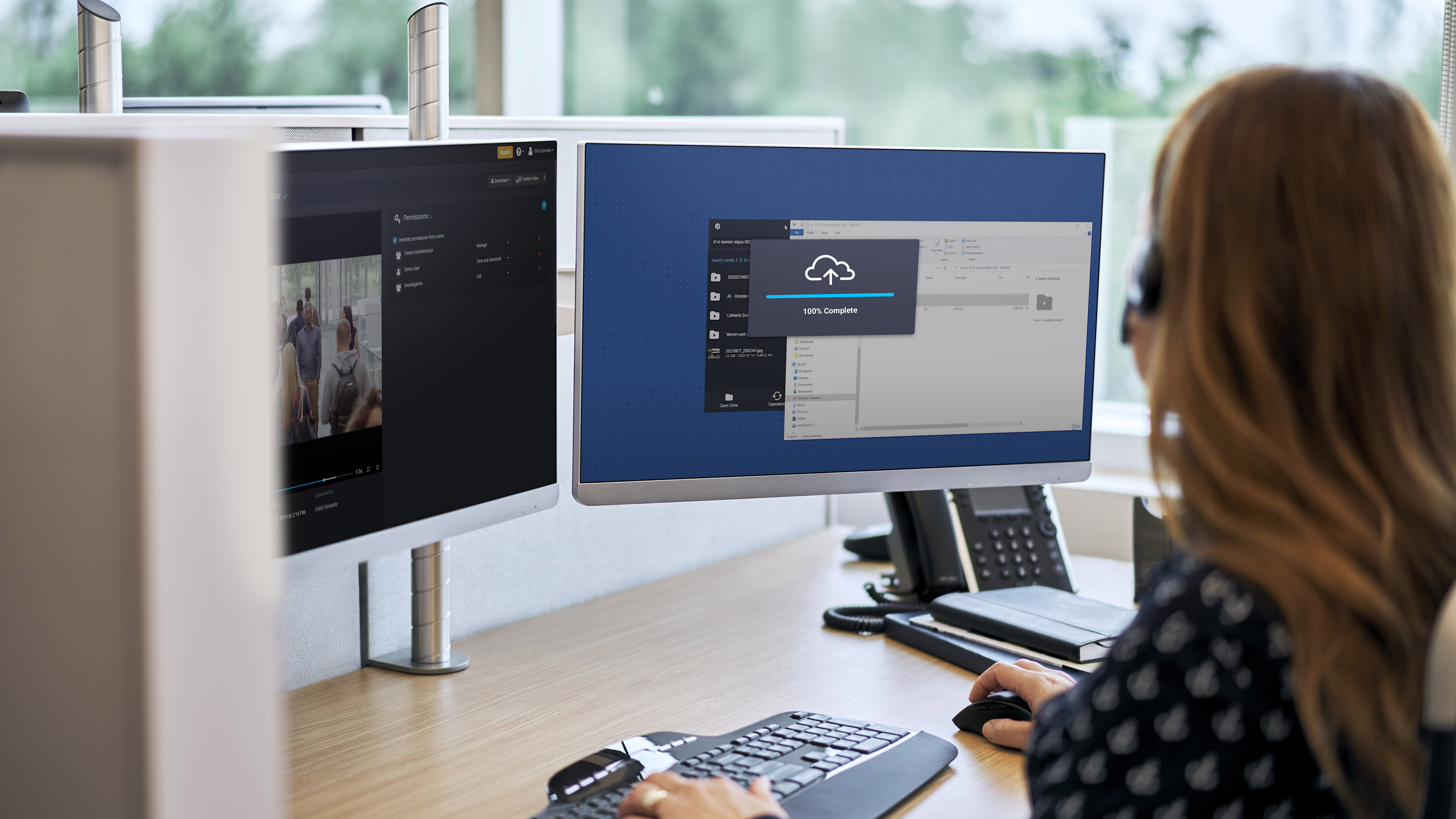
A unified platform can adapt to these scenarios and even let your operators manage sites with cloud-based and on-prem systems from a centralized hybrid environment.
CHECKLIST
Customization
A unified platform is flexible enough to meet a wide range of needs. You can customize it and connect it to your existing systems and devices, adding new technology as you scale operations and automate processes.
By tailoring the platform to your unique needs, you prep your security environment for the future without compromising usability right now.
Better long-term business value and ROI
When you run multiple physical security systems under one platform, you collect a lot of valuable data. Unification helps you use this data to enhance your business operations. You can turn on relevant business intelligence modules in the platform, then use the data to inform your operational decisions.
For instance, you might be running video, access control, intrusion, and intercom all in one unified platform. You could build custom dashboards and add visualization tools to help your operators make sense of the data faster. You could also add digitized response processes to support their decision-making.
In a hybrid work environment, you could use occupancy analytics to help make the best use of office space or to inform future lease agreements. You can also use ALPR data to learn how many vehicles are entering your property and when, which could impact decisions about traffic flow or parking capacity.
You can get even more insights by connecting industrial Internet of Things (IIoT) sensors, like those for lighting or HVAC systems, to a unified platform. This lets you set up automations, like controlling airflow when room occupancy gets high or turning on the lights when the first office employee taps their badge in the morning.
Unification saves costs and adds value to your security
A unified platform offers business applications that can deliver cost savings and get a higher ROI from your security system. But it also does more—it helps C-suite executives understand that the right physical security technology can improve how you work, well beyond your security department.