


What is intelligent automation in physical security?
Discover how responsible AI-based tools are helping solve real-world problems.

It’s no secret that artificial intelligence (AI) has been creating buzz across industries. But it’s becoming increasingly difficult to distinguish between hype and reality. That’s why more organizations are prioritizing intelligent automation.
Intelligent automation combines AI with other technologies to solve real-world problems. Deep learning and machine learning can be paired with rich data models and rules and policies to trigger tasks without manual setup. These automations can be configured within an intuitive user experience. All this helps operators streamline workflows and interpret data more efficiently across applications.
Keep reading to learn how intelligent automation can drive the security results you’re looking for.
GUIDE
What’s the difference between intelligent automation and AI?
The difference between AI and intelligent automation can be summed up like this:
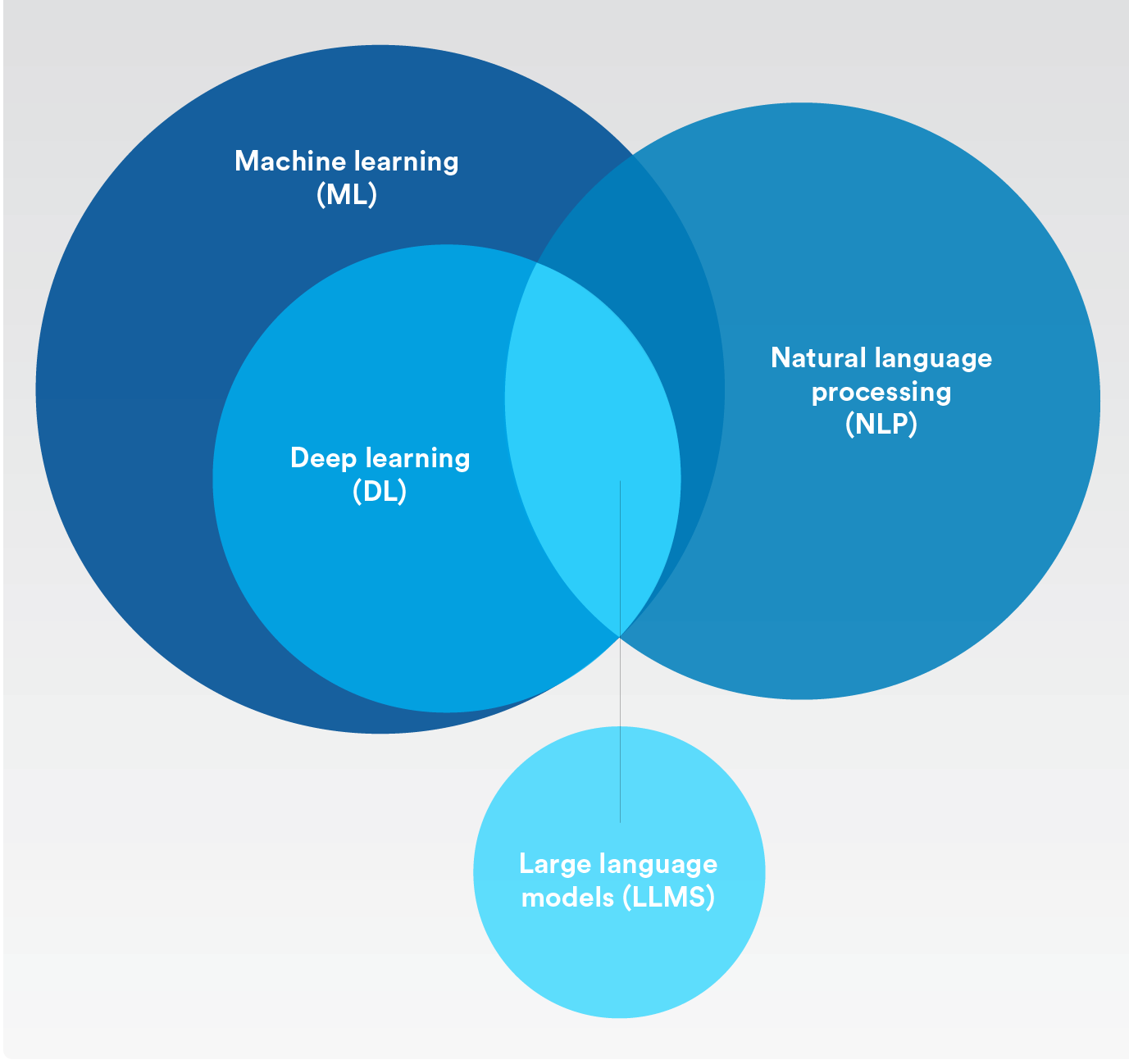
AI is a broad term for a set of tools that allow machines to learn from data and perform tasks without direct programming. Deep learning and machine learning techniques, as well as advanced systems and data science practices, are all AI. Generative AI is a subset of deep learning used in large language models (LLMs) like ChatGPT and Microsoft Copilot.
Intelligent automation combines AI tools with other technologies and principles to automate processes. It starts with a question, a goal, or a problem. Then, technologies come together to achieve that goal or solve that problem. It’s the combination of technologies that makes an intelligent automation solution.
Intelligent automation can transform how people work, but it requires responsible AI use.
What does that mean? Responsible AI principles ensure that AI tools protect data and privacy, foster trust, and minimize bias. Most importantly, they keep people at the center of every decision.
Physical security solutions with intelligent automations should always keep humans in the loop. AI algorithms, rich data models, and specific policies work together in the background to process data from sensors. The goal is for the operator to know and see exactly what’s happening in the security environment. In this way, intelligent automation lessens their workload and helps them make decisions faster.
BLOG
Exploring the benefits of intelligent automation
Intelligent automation is all about achieving meaningful results—results that can drive real business value. And those results can drive real business value. Here are some benefits of intelligent automation that stand out:
Improve productivity – Intelligent automation solutions optimize resources by eliminating repetitive tasks. AI-enabled tools, custom scripts, APIs, and intuitive user workflows help operators focus on tasks that require human judgment.
Make faster decisions – Intelligent automation can help operators handle the surging volume of physical security data. It helps them detect and understand emerging events so they can make faster, better-informed decisions. Finding evidence and closing cases faster means better overall security.
Enhance business processes – Intelligent automation can boost efficiency across business operations. AI-powered analytics can analyze multiple data sources simultaneously to uncover new insights. They can also identify opportunities for further automation.
Strengthen compliance – Intelligent automation doesn’t just digitize procedures and streamline workflows. It also helps track activity across systems and sites. This supports consistent compliance with corporate and regulatory policies across all processes.
Product Release
Intelligent automation: What Genetec offers
AI and automation have many applications in physical security. Genetec solutions use AI-powered tools to help our customers achieve heightened productivity and security. Here are some examples of our latest intelligent automation solutions:
The automation feature in Security Center uses AI-powered video analytics events to run sophisticated rules and actions and to detect patterns. It draws on footage from partner cameras or server-based solutions.
A user could set an automation rule that triggers an incident response workflow only under certain conditions. For example, a workflow could be set off when a radar senses motion in the perimeter area and a camera running an AI-based algorithm also detects a person nearby. This helps reduce nuisance alarms and alerts operators only to potentially serious threats.
Integrated video analytics can alert security operators when maximum occupancy limits are reached or when customer lines get too long. Operators can also keep tabs on traffic flow and wanted vehicles with automatic license plate recognition (ALPR). Cameras detect vehicles whenever they enter the field of view. Then, advanced machine learning models analyze vehicle images to detect license plates, color, make, and model for investigative purposes.
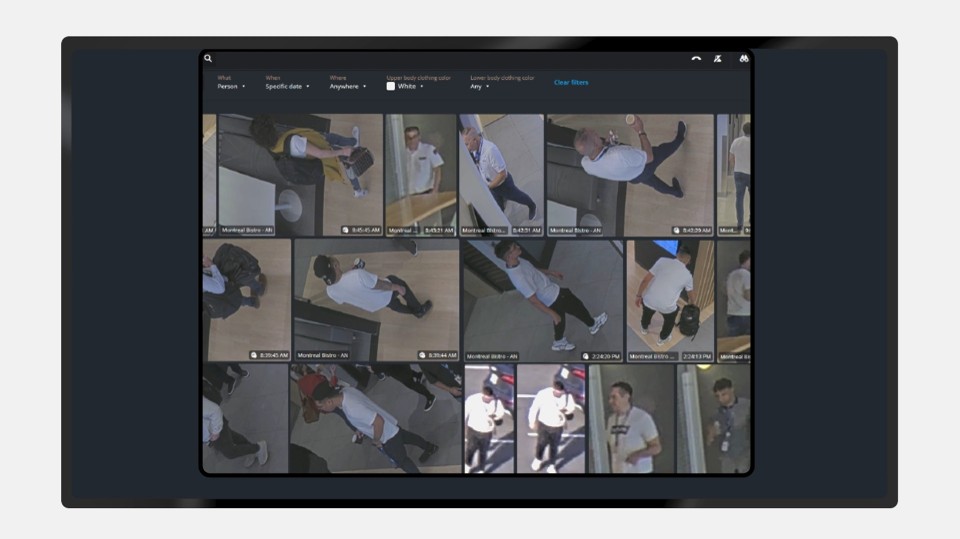
The intelligent search feature in Security Center SaaS uses metadata from tech partner cameras that run machine learning models on the edge. Security Center SaaS then aggregates and manages the data, helping operators detect key events. For example, intelligent search can identify when objects enter or exit a scene. It can also find similar-looking people across multiple cameras or sites. Operators can get the full situational context by checking events detected nearby before and after a trigger.
The intelligent search feature also uses an LLM to translate natural language search prompts into database queries. That means operators can search footage using their own words, in addition to applying filters, to find the information they need within seconds.
PRESS RELEASE
The future of intelligent automation and AI
AI is getting a lot of attention right now in physical security. The growing use of generative AI tools like ChatGPT is skewing expectations and creating overpromised hype. Yet there’s no denying that AI will evolve to play a significant role in the way security systems are deployed, configured, and used.
The reality is that AI can enable powerful intelligent automation applications. When designed responsibly, these tools have massive potential to improve how organizations operate and innovate.
Remember, AI is a set of tools that facilitates intelligent automation—nothing more. When you focus on achieving outcomes and goals using intelligent automation, that’s when you’ll realize next-level results.
